

Out with mosquito control, in with mosquito management
Let’s start on the right foot. “Mosquito control” is becoming an outdated term, associated with the historical baggage of chemical use, and it also implies that 100% eradication is possible. Modern methodology is “integrated mosquito management.” The integrated approach relies on public education, surveillance, resistance monitoring, and mosquito treatment. Both concepts typically refer to professional-level methods, but there's also a lot you can apply at home through treatments and repellents.
Mosquito treatment vs. mosquito repellent
When it comes to managing mosquitoes in your own yard, it's essential to differentiate between long-term treatment strategies and the immediate relief offered by repellents. Treatment methods work to systematically reduce mosquito populations by targeting their larval habitats or existing adults in the area. Treatment with larvicides and natural predators, such as fish, targets immature water-bound mosquitoes, while adult mosquitoes are combatted with adulticides and by fostering habitats for birds and bats. These strategies are designed for lasting mosquito suppression in outdoor spaces, unlike repellents, which provide quick but temporary protection from bites when applied to skin or clothing.
When planning a mosquito management strategy for your home, treatments can create an excellent foundation that works alongside repellents and repellent devices for more peaceful evenings.
Understanding mosquito biology and behavior
Before delving into the various ways to manage mosquitoes, it's important to understand their behavior and biology. This knowledge helps develop effective management strategies that consider their habitats, life cycle, and activity patterns.
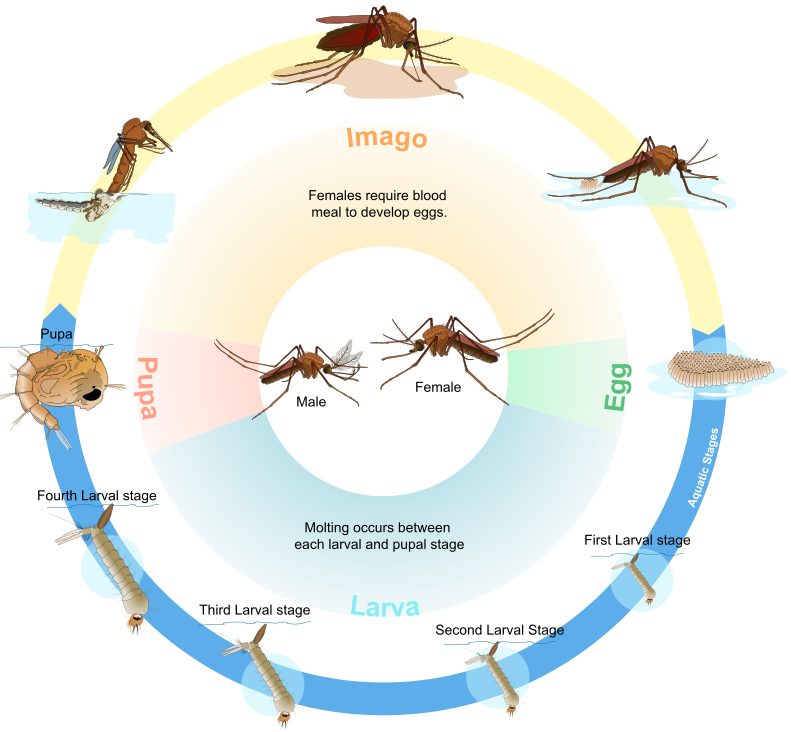
Mosquito life cycle
A mosquito's life cycle unfolds in four key stages:
-
The egg stage.
-
The larva stage.
-
The pupa stage.
-
Finally, the adult stage.
While it varies by mosquito species, females lay their eggs in or on water. They can lay anywhere from dozens to hundreds of eggs at a time, which float on the surface until they hatch. Even a small amount of water can attract female mosquitoes, so it's wise to keep an eye out for any standing water around your home. Once the eggs hatch, the larvae feed on microorganisms in the water and transform into pupae after three molts. Pupae continue their development until the new adult mosquito emerges from the pupal skin and leaves the water. After emerging, male mosquitoes feed on nectar, while females feed on nectar and need to ingest blood to lay eggs. Females seek water to deposit their eggs within their flight range.
Fun fact
Aedes mosquitoes have a flight range of less than 700 feet, but Culex can travel 1–2 miles, Anopheles 1–3 miles, and, if we consider saltmarsh mosquitoes, they can fly over 5 miles.
Immature mosquito habitats
Natural aquatic environments, such as marshes and ponds, as well as human-made receptacles like unused tires, buckets, and bird baths, can become mosquito breeding grounds. Important note: keeping your yard free of standing water, even in small amounts, can significantly reduce the mosquito population in your surroundings.
Mosquito behavior patterns
Different mosquito species exhibit different behavioral patterns. Some are active during the day, while others prefer the night. Typically, mosquitoes reach their peak biting activity at dawn and dusk, which is known as crepuscular activity. It's also important to consider environmental factors such as temperature and humidity. Mosquitoes thrive in warm temperatures, around 80 °F. Relative humidity plays a critical role in their activity: high humidity levels promote mosquito activity, while low humidity inhibits it and can even lead to mortality. Understanding these patterns and factors helps plan and execute effective mosquito management strategies.
Mosquito larval treatment techniques
Focusing on larvae is crucial for controlling mosquito populations. Targeting these immature stages, when they are concentrated, immobile, and more accessible, is highly effective in reducing the total number of mosquitoes. This approach not only decreases the risk of diseases transmitted by adult mosquitoes but also minimizes the environmental impacts and difficulties associated with managing a much more mobile adult population.
Reduction of breeding sources
This can be as simple as being vigilant and eliminating any standing water accumulation in the yard, even very small amounts in gutters, drains, pot saucers, tree holes, or even plants like bromeliads. If there's water you want to keep, such as in fountains or bird baths, make sure to change it once a week, unless it's already circulating, as in a fountain. Looking for more tips like these? Check out our spring mosquito control tips.
Community involvement
Community involvement and public health education play a fundamental role in mosquito management. When communities are informed about mosquito-borne diseases, they can collectively improve the outdoor experience in their neighborhood. It can be helpful to check if your city or county has information about ongoing community initiatives where you can collaborate.
Taking proactive measures to eliminate standing water, implementing effective waste management strategies, and organizing community clean-up activities can lead to significant advances in reducing mosquito breeding habitats. Encouraging the reduction or reuse of objects that can collect water helps prevent these areas from becoming fertile breeding grounds for mosquitoes.
These efforts are vital to support communities when they collaborate with mosquito control districts and participate meaningfully in collective efforts to manage their populations. By adopting these actions together, communities contribute greatly to reducing the risks associated with mosquitoes.
Mosquito management services
Local pest control companies often offer mosquito treatment services. These companies frequently use pesticides on the vegetation surrounding the home. When mosquitoes land on that vegetation, the pesticide eliminates them on contact.
Mosquito-repelling plants
Enhance your outdoor space by considering planting mosquito-repelling herbs. These natural repellents not only add greenery but can also help keep annoying mosquitoes away. Some excellent options include basil, catnip, citronella, garlic, lavender, lemon balm, lemongrass, marigold, pennyroyal, peppermint, rosemary, and scented geranium. These plants are often available at local garden centers and bring both beauty and functionality to your outdoor oasis.
Modern mosquito management
Wondering how modern technology can help protect our yards from mosquitoes? That's where Thermacell products come in, designed to help you live mosquito-free. Inside the rechargeable repellent devices, a discreet heater quietly heats and activates the repellent. Once operating, the repellent disperses and forms an invisible 20-foot barrier that keeps mosquitoes away. It works continuously, releasing a steady dose of repellent to maintain the protective barrier around you. The E90, chosen by NYTimes as one of the best options for effective mosquito protection equipment, features a rechargeable battery that lasts up to nine hours, ensuring a mosquito-free environment for an entire afternoon or evening, without odors.
To further enhance your yard experience, discover the new LIV system. The LIV system, a network of Thermacell devices for your yard, can be controlled from your smartphone with schedules, timers, push notifications, and a repellent level indicator.